
Steel Detailing vs Structural Steel Detailing: What’s the Difference?

Introduction
In the construction and structural engineering industry, the terms steel detailing and structural steel detailing are often used interchangeably. While they are closely related, they are not exactly the same. Understanding the distinction can help architects, engineers, fabricators, contractors, and project owners choose the right detailing services for their projects.
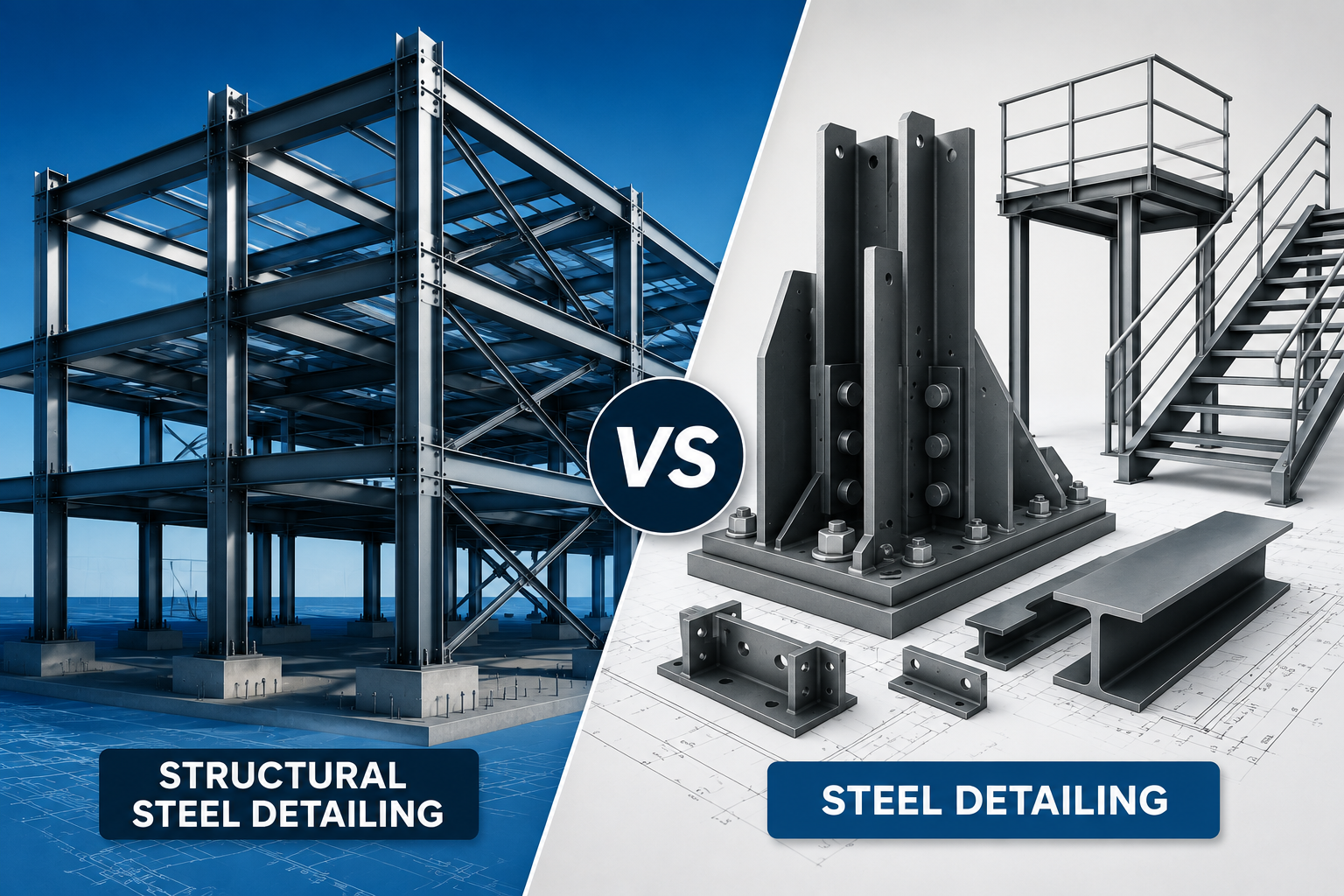
Structural steel detailing is a specialised branch of steel detailing that focuses on the primary load-bearing framework of buildings, bridges, industrial plants, warehouses, stadiums, and other infrastructure. Steel detailing, on the other hand, is a broader discipline that also includes miscellaneous and architectural steel components.
In this guide, we’ll explain the differences, applications, deliverables, and benefits of each service, helping you determine which solution best fits your project.
What Is Steel Detailing?
Steel detailing is the process of producing accurate fabrication and erection drawings for steel components used in construction projects. These detailed drawings ensure every steel element is manufactured, assembled, and installed according to the engineer’s design specifications.
Steel detailing acts as the bridge between structural design and fabrication. Detailers convert engineering calculations into practical shop drawings that fabricators and erectors use throughout the construction process.
A complete steel detailing package typically includes:
- Shop drawings.
- Erection drawings.
- Fabrication drawings.
- Material take-offs.
- Bolt schedules.
- Weld details.
- CNC files.
- Assembly drawings.
- Bills of Materials (BOM).
Steel detailing covers a wide range of steel products, including structural, miscellaneous, and architectural steel.
What Is Structural Steel Detailing?
Structural steel detailing is a specialised discipline that focuses exclusively on the primary structural framework of a building or industrial facility.
These members are responsible for supporting the loads of the structure and transferring them safely to the foundation.
Structural steel detailing generally includes:
- Columns.
- Beams.
- Girders.
- Trusses.
- Bracing systems.
- Base plates.
- Gusset plates.
- Connection plates.
- Anchor bolts.
- Structural connections.
Every structural steel member must be accurately detailed to ensure proper fabrication, transportation, and installation while complying with project specifications and applicable design codes.
Steel Detailing vs Structural Steel Detailing
| Feature | Steel Detailing | Structural Steel Detailing |
|---|---|---|
| Definition | Broad discipline covering all steel components | Focused on primary structural members |
| Scope | Structural, miscellaneous, and architectural steel | Structural load-bearing steel only |
| Components | Railings, stairs, ladders, platforms, canopies, structural steel | Beams, columns, braces, trusses, girders, connections |
| Purpose | Fabrication of all steel products | Structural integrity and safe load transfer |
| Deliverables | Shop drawings, fabrication drawings, BOMs | Structural shop drawings, connection details, erection drawings |
| Typical Projects | Commercial, industrial, residential, infrastructure | High-rise buildings, bridges, industrial plants, warehouses |
Types of Steel Detailing
1. Structural Steel Detailing
This service focuses on the building’s structural skeleton and includes:
- Beam detailing.
- Column detailing.
- Truss detailing.
- Bracing detailing.
- Steel connection detailing.
- Base plate detailing.
- Anchor bolt detailing.
2. Miscellaneous Steel Detailing
Miscellaneous steel detailing covers non-primary steel components such as:
- Staircases.
- Handrails.
- Guardrails.
- Ladders.
- Platforms.
- Catwalks.
- Pipe supports
- Equipment supports.
- Roof access systems.
3. Architectural Steel Detailing
Architectural steel detailing emphasises aesthetics as well as functionality.
Common applications include:
- Decorative staircases
- Feature steelwork
- Glass support systems
- Architectural canopies
- Façade support framing
- Ornamental steel
Why Structural Steel Detailing Matters ?
Accurate structural steel detailing directly impacts the success of a construction project.
Improved Fabrication Accuracy
Detailed shop drawings minimise fabrication errors and reduce costly rework.
Faster Construction
Precise erection drawings enable smoother installation and minimise site delays.
Better Coordination
Structural steel detailing integrates seamlessly with architectural, mechanical, electrical, and plumbing models through BIM workflows.
Reduced Material Waste
Optimised detailing ensures efficient material usage and improves project profitability.
Code Compliance
Professional detailing ensures compliance with project specifications and industry standards.
Deliverables of Structural Steel Detailing Services
Professional structural steel detailing services typically include:
- Structural shop drawings.
- Steel fabrication drawings.
- Steel erection drawings.
- Connection detailing.
- Anchor bolt plans.
- Base plate details.
- Assembly drawings.
- Single-part drawings.
- General arrangement drawings.
- Bolt schedules.
- Weld schedules.
- Material take-offs.
- Bills of Materials (BOM).
- CNC data files.
- NC1/DSTV files.
Industries That Benefit from Structural Steel Detailing
Structural steel detailing is widely used across multiple industries, including:
- Commercial buildings.
- Residential developments.
- Industrial facilities.
- Warehouses.
- Manufacturing plants.
- Airports.
- Hospitals.
- Educational institutions.
- Sports stadiums.
- Bridges.
- Power plants.
- Oil and gas facilities.
- Mining projects.
Software Used for Structural Steel Detailing
Modern detailers rely on advanced software to improve precision and collaboration.
Popular platforms include:
- Tekla Structures.
- Autodesk Advance Steel.
- Autodesk Revit.
- SDS2.
- AutoCAD.
- Navisworks.
- BIM 360.
These tools enable clash detection, automated drawing generation, material tracking, and BIM coordination.
Why Choose Professional Structural Steel Detailing Services?
Experienced steel detailers help projects move efficiently from design to fabrication by delivering accurate, coordinated, and fabrication-ready documentation.
A professional detailing partner can provide:
- Experienced detailers
- BIM-enabled workflows
- High-quality shop drawings
- Fast turnaround times
- Strict quality control
- Compliance with international standards
- Coordination with architects, engineers, and fabricators
- Cost-effective detailing solutions
Whether you’re constructing a commercial building, industrial plant, warehouse, or bridge, professional structural steel detailing helps reduce project risks while improving construction efficiency.
Frequently Asked Questions
Is structural steel detailing the same as steel detailing?
Not exactly. Structural steel detailing is a specialised subset of steel detailing that focuses on the primary load-bearing framework. Steel detailing is a broader term that also includes miscellaneous and architectural steel.
What drawings are included in structural steel detailing?
Typical deliverables include shop drawings, erection drawings, connection details, fabrication drawings, bolt schedules, weld schedules, Bills of Materials (BOM), and CNC files.
What is miscellaneous steel detailing?
Miscellaneous steel detailing covers secondary steel components such as stairs, ladders, railings, platforms, and other non-primary structural elements.
Which software is commonly used for structural steel detailing?
Popular software includes Tekla Structures, Autodesk Advance Steel, SDS2, Revit, AutoCAD, and Navisworks.
Why is structural steel detailing important?
Accurate detailing reduces fabrication errors, improves coordination, speeds up construction, minimises material waste, and supports successful project delivery.
Conclusion
Although the terms steel detailing and structural steel detailing are frequently used interchangeably, they represent different scopes of work. Steel detailing is the broader discipline encompassing structural, miscellaneous, and architectural steel, while structural steel detailing focuses exclusively on the load-bearing framework that forms the backbone of a structure.
Choosing an experienced structural steel detailing partner ensures accurate shop drawings, seamless BIM coordination, efficient fabrication, and successful project execution. Whether your project involves commercial buildings, industrial facilities, bridges, or complex infrastructure, investing in high-quality structural steel detailing services helps improve accuracy, reduce costs, and keep construction on schedule.


