
Introduction
In the construction and manufacturing industries, the role of steel fabrication is a fundamental process. It involves the process of transforming raw steel into predefined shapes and structures. In the modern world, from towering skyscrapers and robust machinery parts to household parts, steel fabrication plays an important role in shaping.
Steel is known for its strength, durability, and versatility. It’s a preferred material across a wide range of applications.
What is Steel Fabrication?
The process of cutting, bending, welding, assembling, and finishing steel into usable products is called steel fabrication. It typically involves the use of specialized tools, machines, and skilled labour to create structural components, frameworks, or custom-designed parts.
Key Steps in Steel Fabrication
Steel fabrication is a structured and multi-stage process that transforms raw steel into finished products through a combination of mechanical, thermal, and chemical procedures. Each step is crucial for ensuring that the final product is durable, structurally sound, and precisely made according to design requirements. Below are the major stages involved in steel fabrication, explained in detail with examples.
Design and Planning
Designing and planning is the first and most critical step in steel fabrication. During this phase, designers and structural engineers create detailed blueprints, 3D models and engineering drawings of the components to be fabricated. They use software like CAD (Computer-Aided Design) and BIM (Building Information Modeling) to ensure every detail, such as dimensions, material grades, and connection types, is accurately defined.
This phase also includes load calculations, tolerance allowances, and coordination with other building elements. For example, if a structural steel beam is being designed for a multi-story building, its load-bearing capacity, span length, and joint details must be precisely calculated and modelled before fabrication begins. Mistakes at this stage can lead to structural failures or costly delays during construction.
Cutting
Once the design is finalized, the raw steel sections (plates, sheets, bars, or beams) are cut into specific sizes and shapes as required.
Depending on the type and thickness of steel several cutting techniques are used. Mechanical methods such as sawing and shearing are common for basic cuts, while thermal methods like plasma cutting and laser cutting are used for more precise or complex shapes. For example, in the fabrication of a custom steel staircase, the treads and risers are laser-cut to exact dimensions to ensure they fit perfectly during assembly. Accurate cutting ensures that each piece fits seamlessly with others, reducing waste and assembly time.
Bending and Shaping
After the process of cutting is completed, many steel components are bent or shaped to meet the design specifications. It involves transforming flat or linear steel into curves, angles, or more complex geometries using machines such as press brakes, hydraulic presses, and rollers. The goal is to mold the steel without compromising its structural strength.
For example, in the creation of handrails for a curved staircase, steel pipes may be bent using a rotary draw bender to achieve the required radius. Proper shaping is essential for aesthetic and structural purposes, especially in architectural and custom-designed structures.
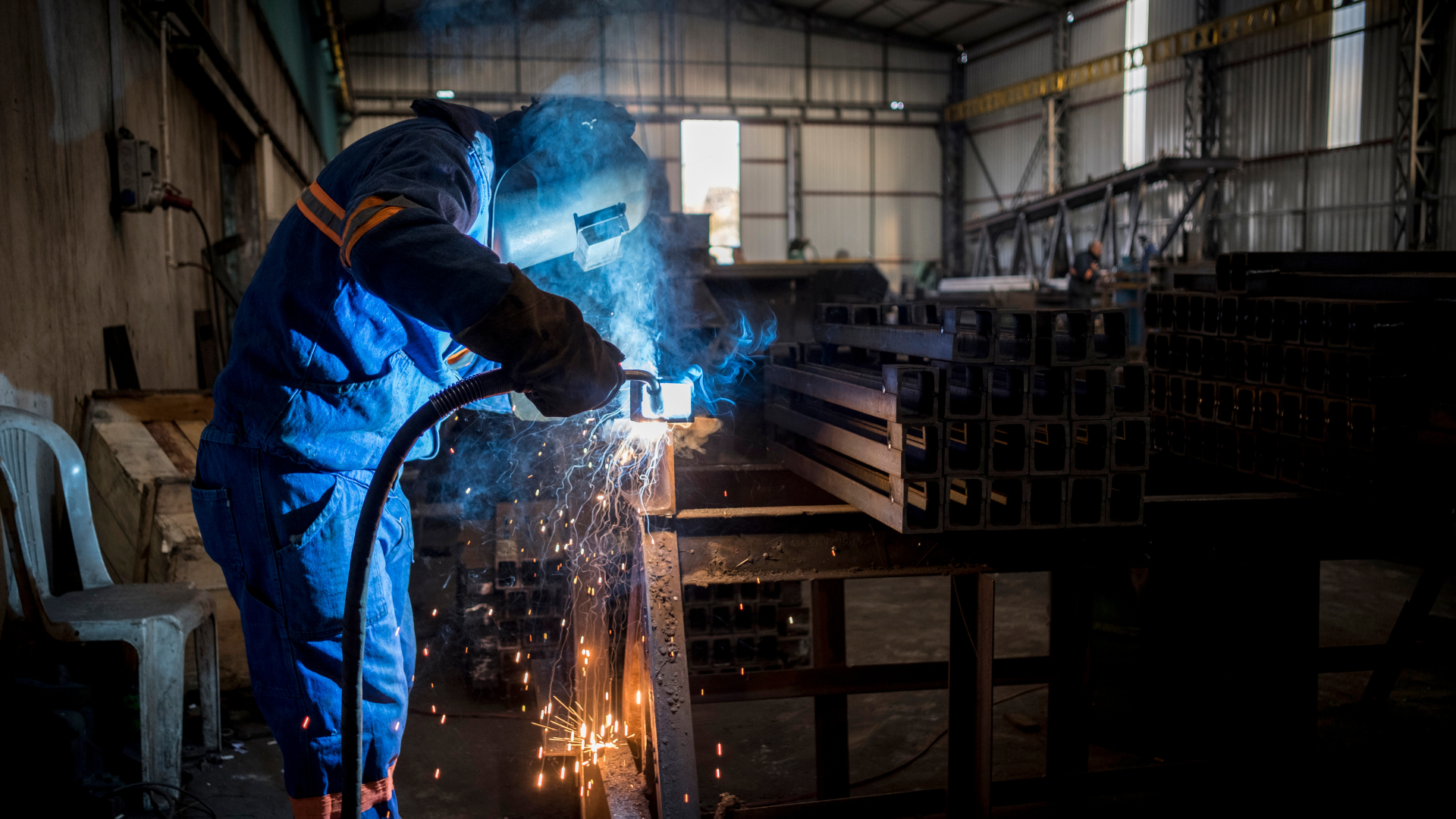
Welding and Joining
Welding and joining is considered a core of the fabrication process. In this step individual steel parts are assembled into large components or structures. Metals are fused using heat and pressure to form strong and permanent bonds. Different welding techniques—such as MIG (Metal Inert Gas), TIG (Tungsten Inert Gas), and stick welding—are selected based on the material thickness and design. In some cases, bolting or riveting may be used instead of welding, especially for modular structures.
For example, when fabricating a steel bridge girder, plates are welded together along seams, and connection plates are bolted to ensure stability and flexibility. Skilled welders must follow proper welding procedures to maintain quality and avoid defects like cracks or weak joints.
Surface Treatment and Finishing
Once the components are welded and assembled, surface treatment is applied to enhance the steel’s durability and visual appeal. This step is especially important for steel that will be exposed to weather, chemicals, or high moisture environments. Common surface treatments include sandblasting (to remove rust and debris), galvanizing (coating with zinc for corrosion protection), powder coating, and industrial painting. For example, steel fencing panels intended for outdoor use are often hot-dip galvanized and then painted to resist rust and maintain appearance over time.
Assembly and Quality Control
The final step in steel fabrication is assembly and quality control. This involves the final fitting of components, thorough inspection of all joints, dimensions, and finishes, and in some cases, test fitting or dry runs before delivery to the project site. Quality control is done using both visual inspection and non-destructive testing methods like ultrasonic testing or X-ray scans to detect internal flaws in welds. For example, when fabricating a steel support frame for an industrial plant, every beam and bolt hole is measured and tested to ensure it aligns precisely with the foundation layout. Documentation, certification, and approval by qualified inspectors are often required before the steel components are approved for use.
FAQ’s
1. What is steel fabrication in construction?
Steel fabrication is the process of cutting, bending, and assembling raw steel into structural components used in buildings, bridges, and industrial projects. It involves transforming design drawings into physical elements such as beams, columns, and trusses that are ready for installation on-site.
2. What are the main processes involved in steel fabrication?
The key processes in steel fabrication include cutting (using methods like shearing, sawing, or laser cutting), bending, welding, machining, and assembly. These processes are carried out based on detailed shop drawings to ensure that each component meets design specifications and quality standards.
3. How does steel fabrication differ from steel detailing?
Steel fabrication focuses on the physical production of steel components, while steel detailing involves creating the drawings and models that guide fabrication. Tools like Tekla Structures and Autodesk Revit are used in detailing to provide accurate information for fabricators.
4. What factors affect the quality of steel fabrication?
The quality of steel fabrication depends on factors such as the accuracy of design drawings, the quality of raw materials, the skill of fabricators, and the use of proper equipment and standards. Strict quality control measures and inspections are essential to ensure durability and structural integrity.
5. Why is steel fabrication important in modern construction?
Steel fabrication is important because it enables the efficient production of strong, durable, and precisely engineered components. It supports faster construction, reduces on-site work, and ensures consistency in quality, making it a key part of modern infrastructure and building projects.
Contact Us

Send Us
drawings and scope
Click the Dropbox link and send us your complete scope and drawings.
We will provide estimate in 24 to 48 hours.


